Behavioural change, made measurable and scalable.
Accelerate the sustainability transition through behavioural change.
The transition to a circular economy needs more than new technology — it needs existing materials to be used fully and consumption to decrease, both of which depend on household behaviour. MOWW makes that behavioural shift measurable and scalable, using AI-driven values analysis, OBM and agent-based modelling to complement — not replace — technological solutions.
MOWW is an AI-powered behavioural platform helping organizations and communities to achieve measurable sustainability outcomes by increasing circularity, reducing consumption, and enabling lasting behavioural change at scale.
Research meets execution.
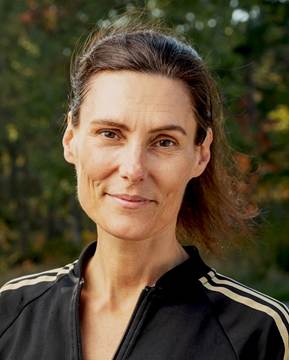
Karen Froede
Karen Froede is a multidisciplinary architect and engineer educated at KTH Royal Institute of Technology, a researcher in Organisational Behaviour Management (OBM) at Södertörn University and Teamkultur, and an artist educated at the University of Gothenburg. Her interdisciplinary research and practice explore the conditions that enable humanity both to achieve and to embrace ways of living within the Earth’s planetary boundaries.
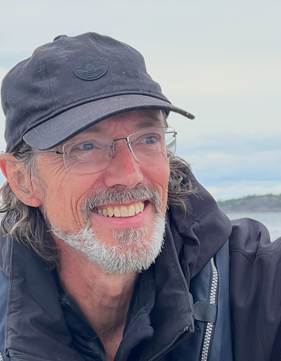
Peter Werme
Peter Werme brings more than 20 years of hands-on entrepreneurial experience, having co-built over 15 companies in health and sustainability. His strength lies in execution, building teams and driving projects from concept to results. Peter holds a degree in Business and Economics (Uppsala University).
Sustainable development is development that meets the needs of the present without compromising the ability of future generations to meet their own needs. Where needs are the essential conditions and resources required for people to live healthy, dignified, secure, and meaningful lives, while remaining within the ecological limits and planetary boundaries.
The methods behind the platform.
Five research areas underpin the MOWW model. In-depth pages for each are in preparation.
Behavioural Science
Placeholder — a short summary of how this discipline contributes to the MOWW model will be published here.
Organisational Behaviour Management (OBM)
Placeholder — a short summary of how this discipline contributes to the MOWW model will be published here.
Artificial Intelligence
Placeholder — a short summary of how this discipline contributes to the MOWW model will be published here.
Agent-Based Modelling
Placeholder — a short summary of how this discipline contributes to the MOWW model will be published here.
Data Analytics
Placeholder — a short summary of how this discipline contributes to the MOWW model will be published here.